

A few warm autumn afternoons can make outdoor maintenance seem easy to schedule. Then a cold night, a stretch of rain, or a driveway that stays shaded changes the picture. If you’re wondering whether you can still seal concrete before winter, the answer requires more than checking today’s high temperature.
Concrete sealing depends on the surface, the selected product, and conditions during preparation, application, and the required drying or curing period. Fall can provide a suitable window, but the calendar alone cannot tell you whether a particular day is appropriate.
For Western Pennsylvania homeowners, the more useful question is this: does your property have the conditions needed for the treatment to perform as intended? MCS Pressure Washing can help you discuss concrete cleaning and sealing with that question in mind.
Why homeowners consider concrete sealing before winter
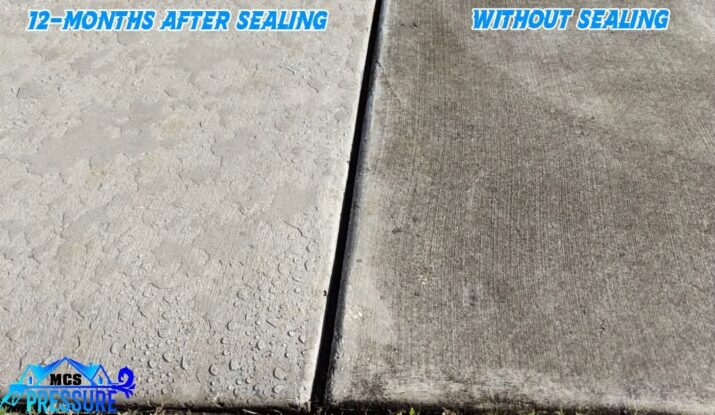
Driveways, patios, and sidewalks encounter moisture, vehicle traffic, dirt, and changing temperatures throughout the year. Concrete is porous, and an appropriate protective treatment can reduce water absorption or provide other benefits depending on the product.
Winter makes water exposure an important maintenance consideration. Water within concrete can contribute to deterioration as it freezes and thaws. A suitable sealer can be part of a maintenance plan, although concrete quality, drainage, existing damage, and winter care also affect performance.
Sealing does not make a driveway indestructible. It cannot correct poor drainage, close structural cracks, or guarantee that a surface will never chip. Its value comes from using an appropriate product on a suitable, properly prepared surface.
Air temperature and concrete temperature are different
The temperature reported on your phone describes the surrounding air. The driveway may have a different temperature, particularly if it is shaded or has remained cold overnight.
A surface that receives afternoon sun may warm differently from a patio behind the house. Sections of the same driveway can also experience different conditions. Those differences matter because sealer instructions commonly address both air and surface temperatures.
Instead of relying on a comfortable afternoon, check the requirements for the actual product being proposed. Minimum temperatures and the time they must be maintained vary. A general rule from an online article should not replace the manufacturer’s technical instructions.
A warm afternoon does not erase a cold-night forecast
The application window extends beyond the moment the crew finishes. Depending on the product, the surface needs suitable conditions while the treatment dries, cures, or develops its protective properties.
Imagine a driveway cleaned and treated during a pleasant afternoon, followed by a sharp temperature drop that evening. Whether that schedule is acceptable depends on the selected sealer’s requirements. Rain arriving before the product can tolerate water exposure creates another concern.
This is why scheduling sometimes changes even when the day looks inviting. Protecting the result means looking ahead at the required conditions, including overnight lows and precipitation, rather than simply finding an open appointment.
Moisture can limit the sealing window
Rain, dew, and washing all affect the condition of the concrete. A surface may appear dry in one area while retaining moisture elsewhere. Cool weather and shaded locations can make drying slower.
Moisture requirements also vary by product. Some penetrating treatments permit limited dampness, while others require a dry surface. Excess moisture can interfere with penetration or the finish, depending on the chemistry involved.
The practical approach is to let the product instructions guide preparation. Avoid assuming that one fixed number of hours after pressure washing will suit every driveway, every forecast, and every sealer.
Concrete cleaning is the preparation step
Before applying a treatment, the surface should be evaluated for dirt, leaf residue, organic growth, spills, and existing coatings. Those conditions influence both cleaning and product selection.
Concrete cleaning can improve the appearance of a driveway or patio and prepare it for further treatment. However, cleaning does not guarantee removal of every stain. Deep discoloration, old repairs, wear, and previous coatings may affect the result.
MCS Pressure Washing offers concrete and paver washing and sealing. Our service page describes cleaning with pressure suited to the surface and offering sealing as an additional option. Homeowners can discuss cleaning alone when sealing is unnecessary or seasonal conditions do not support it.
Penetrating sealers and decorative finishes serve different purposes
A penetrating sealer works within the surface and is often selected when homeowners want protection without a pronounced surface film. We use silane-siloxane treatment options, along with other finish choices.
Decorative or film-forming products can change sheen or enhance color. That may be desirable for some stamped concrete or paver projects, but it brings different preparation and maintenance considerations.
The right question is not simply which product looks best in a photograph. Ask whether it suits your concrete, existing treatment, traffic, appearance preferences, and exposure. Discuss traction and future maintenance as part of the selection instead of assuming all sealers perform the same way.
Existing sealer and surface damage need attention
If your concrete was sealed previously, share that information with the contractor. An existing coating may affect absorption or compatibility. Applying another product without identifying what is already present can create an avoidable problem.
Cracking, flaking, uneven sections, and drainage concerns should also be discussed before sealing. Some conditions require repair or another specialist’s evaluation. Covering the surface with a treatment does not fix the underlying cause.
A homeowner’s photographs and maintenance history can help start the conversation. If you know which product was used before or when it was applied, include those details when requesting an estimate.
When waiting until spring makes sense
Postponing sealing can be the better choice when temperatures, moisture, or the forecast fall outside the product’s requirements. It also makes sense when unresolved damage or an unknown existing coating requires further evaluation.
Cleaning may still be possible when sealing needs to wait, provided washing conditions are appropriate. In that case, the surface may need additional preparation before a later treatment. A fall cleaning should not be assumed to keep the concrete ready for sealing months afterward.
The goal is a successful maintenance project. A rushed treatment followed by corrective work can be more disruptive than choosing a better application window from the start.
Questions to ask before scheduling concrete sealing
Ask what product is being proposed and why it is appropriate for your surface. Request an explanation of the temperature, moisture, and weather requirements, along with when people and vehicles can return.
Also discuss appearance. Will the treatment noticeably darken the concrete or change its sheen? Does the existing surface require repairs or additional preparation? How will the schedule change if the forecast becomes unsuitable?
For pavers, ask whether joint sand needs attention after washing. Concrete slabs and paver systems are different, so the preparation plan should account for the actual material rather than treating every hard surface identically.
Discuss your fall concrete project with MCS
There is no universal date when concrete sealing becomes too late for every property in Western Pennsylvania. The decision depends on the product and the conditions it requires.
MCS Pressure Washing serves Lawrence, Butler, Beaver, and Mercer counties, including New Castle, Cranberry Township, Chippewa Township, and Hermitage. We can discuss cleaning, treatment options, and the timing that makes sense for your driveway, patio, or walkway.
Call 724-714-3312 or request a free quote to discuss concrete cleaning and sealing with MCS. Start with the condition of your surface, and we will help you consider the next step.